QwiklyLaunch — 45-Day SaaS Launch Platform
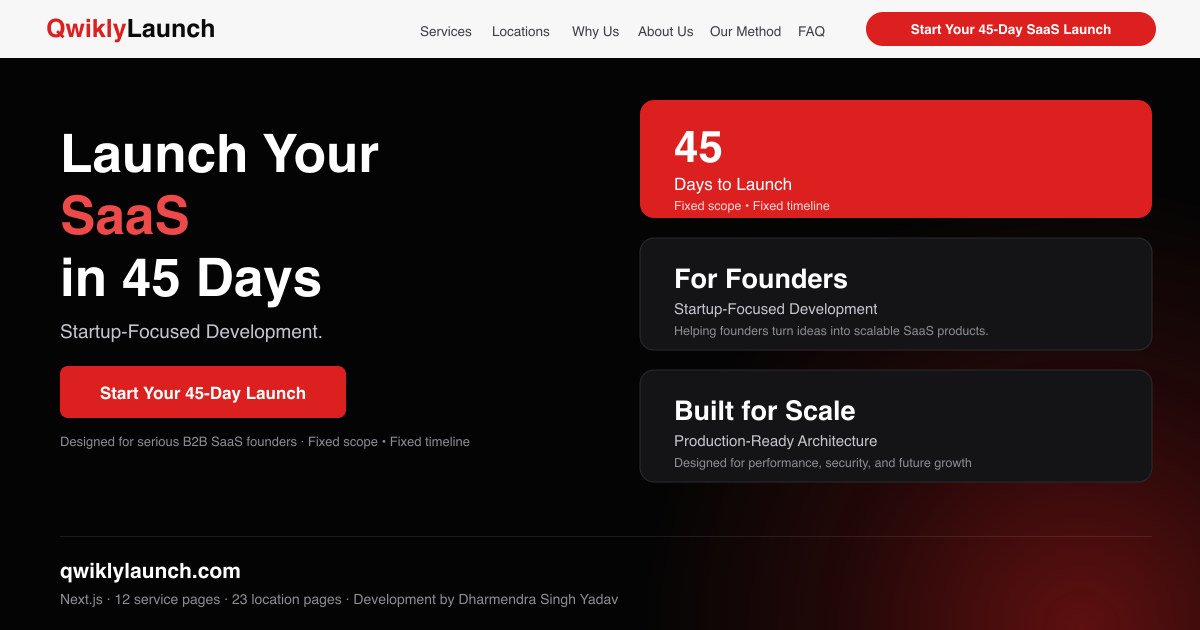
Next.js website for a fixed-scope SaaS development service — 12 service pages across 23 markets, a published week-by-week delivery timeline, and Offer, Audience and FAQPage schema on every page type.
About this project
QwiklyLaunch is a startup-focused SaaS development service selling a fixed-scope, fixed-timeline build: a production-ready B2B SaaS product in 45 days. I worked on the website as a full-stack developer. A fixed-price offer changes what a services site has to do. A normal agency site can stay vague and let a sales call fill in the gaps; this one cannot, because the whole proposition is that there are no gaps. So the pages commit in public — four service lines (AI voice solutions, AI agents, SaaS development, SaaS maintenance), a week-by-week breakdown of the 45 days, and the commercial terms on the page rather than saved for a contract: milestone-based payments, full code and IP ownership, no lock-in. That timeline section was the most demanding part to build well. Week one is discovery and scope definition, week two is architecture, database design and API specification, weeks three and four are build and iterate with testing folded in, and the final phase is deployment with monitoring and handover. Rendering that as a commitment rather than as marketing copy means the template has to stay legible at every breakpoint without collapsing the sequence — a founder reading it on a phone needs the same clarity as one on a laptop. Technically it is a Next.js build with a service layer of 12 pages and a location layer of 23, spanning Indian metros and international markets from London and New York to Dubai, Singapore and the Netherlands. The two dimensions cross without generating a page for every combination — a discipline worth defending, because the fast version of this idea produces hundreds of near-identical URLs and gets a domain treated as doorway content. The structured data was a substantial part of the work. Every page type emits JSON-LD — Organization, WebSite, WebPage, Service, Offer, FAQPage and Audience — and Offer and Audience are the deliberate ones. A fixed-scope, fixed-price service is one of the few things in this market that can be described to a machine unambiguously, and buyers increasingly ask an AI assistant to compare suppliers before they ever load a website.
Tech Stack
Frequently Asked Questions
Details
Questions about this project?
Tell me what you're building — I'll reply within 24 hours.
Related work
Upcoming Projects — Bangalore Property Listing Platform
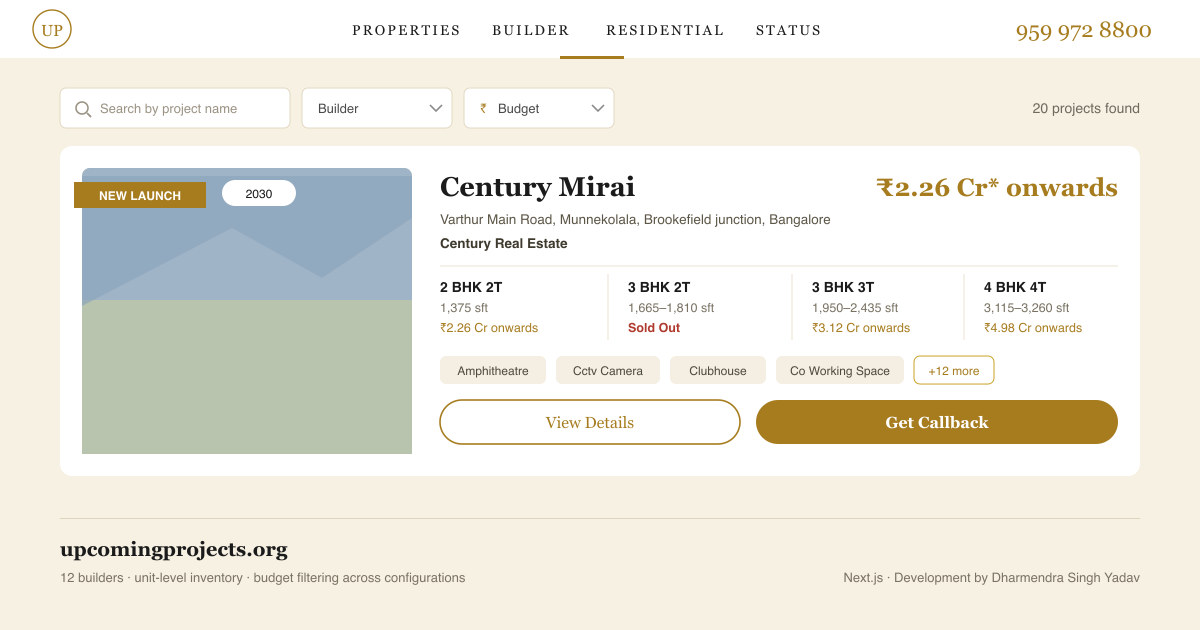
Next.js listing platform for pre-launch and under-construction Bangalore developments — unit-level inventory with per-configuration pricing and availability, and budget filtering that reasons across configurations rather than projects.
LuxPropServ — Luxury Property Services Platform
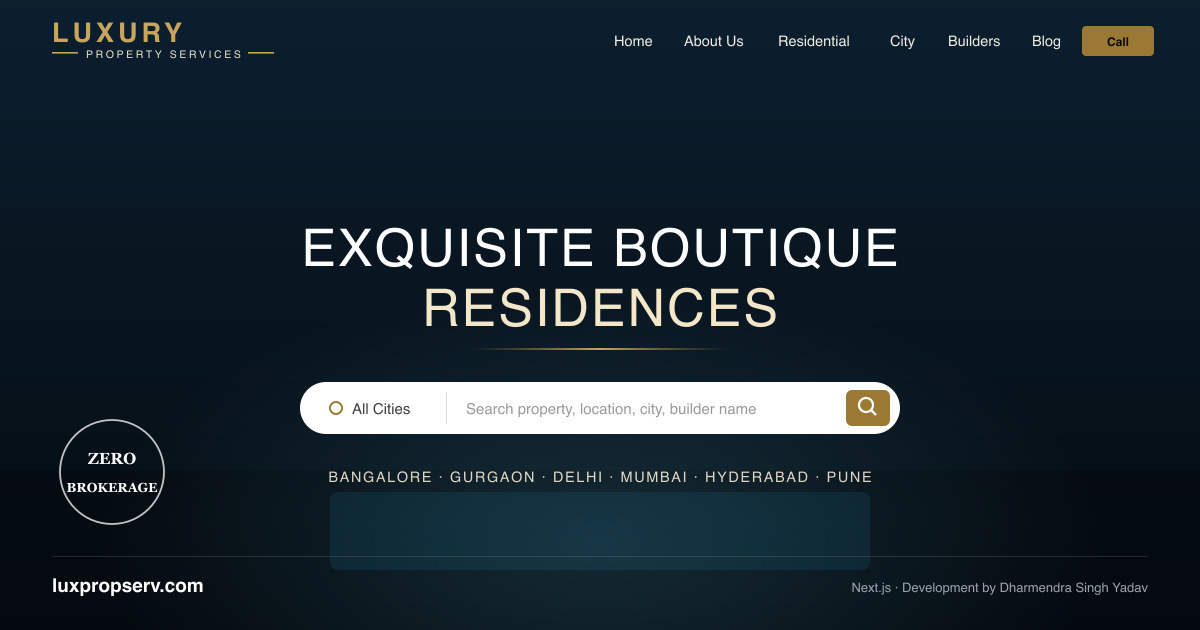
Next.js site for a curated luxury property advisory — a single search across property, location, city and builder, and a schema model that describes a consultative service rather than a listings catalogue.
Hebbal Realty — North Bangalore Luxury Property Portal
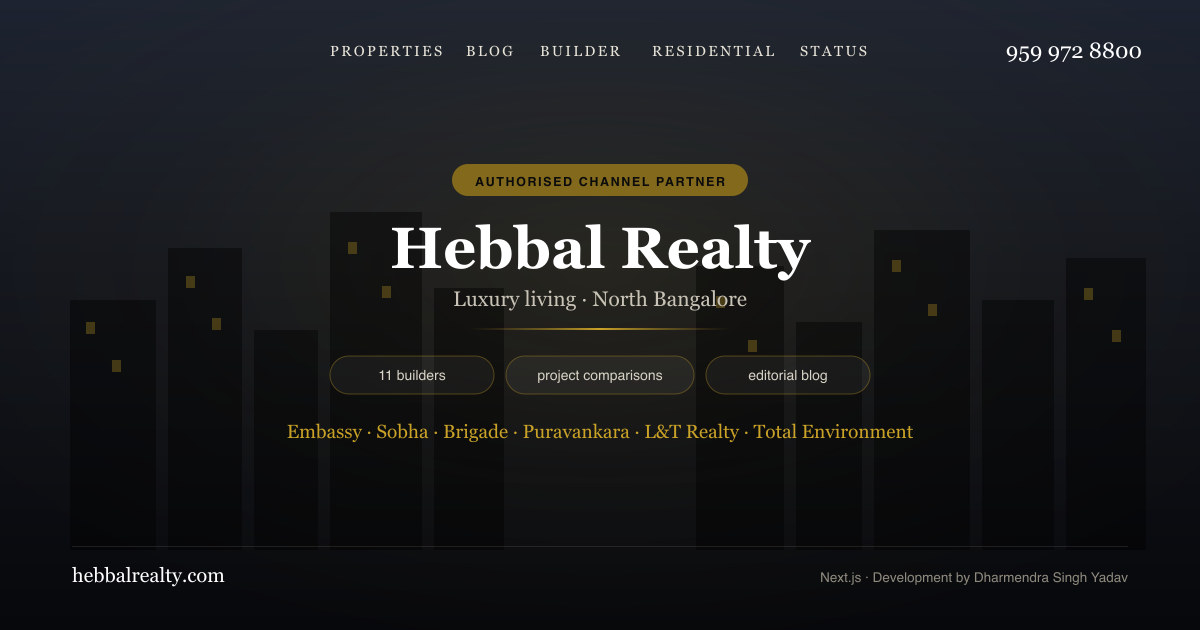
Next.js property portal for the Hebbal luxury corridor — eleven builder pages, faceted browse, and an editorial layer of head-to-head project comparisons aimed at buyers who already have a shortlist.
Chikkajala Realty — North Bangalore Property Portal
Next.js property portal for the Chikkajala–Devanahalli airport corridor — faceted browse by builder, type and status, keyword-first project URLs, and Product/Offer schema describing real inventory.