LuxPropServ — Luxury Property Services Platform
Next.js site for a curated luxury property advisory — a single search across property, location, city and builder, and a schema model that describes a consultative service rather than a listings catalogue.

About this project
LuxPropServ is the luxury property arm of the same business behind Saturn Realcon — same phone number, same zero-brokerage promise, an entirely different build. I worked on the website as a full-stack developer. Having both entries in this portfolio is the point. Saturn Realcon runs on WordPress with Elementor and JetEngine; LuxPropServ is Next.js behind Cloudflare. One business, two stacks, and the honest answer to "which is better" is that they buy different things. WordPress buys editorial independence — a marketing team publishing without a developer. Next.js buys control over what the browser actually does: how fast the first view paints, how a search box behaves as you type, how much JavaScript ships to reach an interaction. On a site whose hero is a full-bleed luxury interior and whose primary control is a search field, that control is worth having. The search is the centre of the product. One field covers property, location, city and builder, with a city selector beside it — a deliberately different model from the sister property portals, where browsing is faceted by builder and status. This audience does not browse inventory. Someone looking at boutique residences usually arrives with a developer or a locality already in mind, so the interface optimises for going straight there rather than for exploring a catalogue. The positioning shapes the architecture too. The site is curation-led rather than listing-led — exclusive properties, smart investments, reputable developers, tailored guidance — and the primary call to action is a thirty-minute call rather than an enquiry form. So the structure carries residential, city and builder sections plus editorial, and the schema reflects that model: WebSite with a SearchAction, Place and GeoCoordinates, rather than the Product and Offer graph a listing-led portal needs. Describing a consultative service as a catalogue of priced items would misrepresent what is being sold. Coverage is led by Bangalore, extending to Gurgaon, Delhi, Mumbai, Hyderabad and Pune, across developers including Sobha, Embassy, Godrej, Prestige and Brigade.
Tech Stack
Frequently Asked Questions
Details
Questions about this project?
Tell me what you're building — I'll reply within 24 hours.
Related work
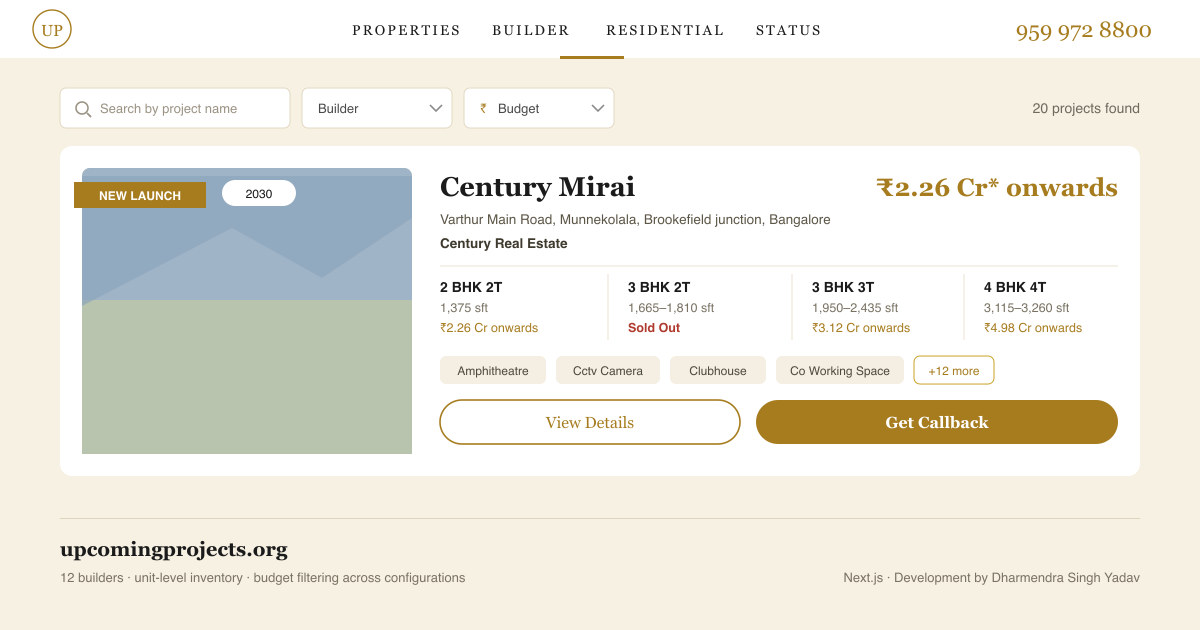
Upcoming Projects — Bangalore Property Listing Platform
Next.js listing platform for pre-launch and under-construction Bangalore developments — unit-level inventory with per-configuration pricing and availability, and budget filtering that reasons across configurations rather than projects.
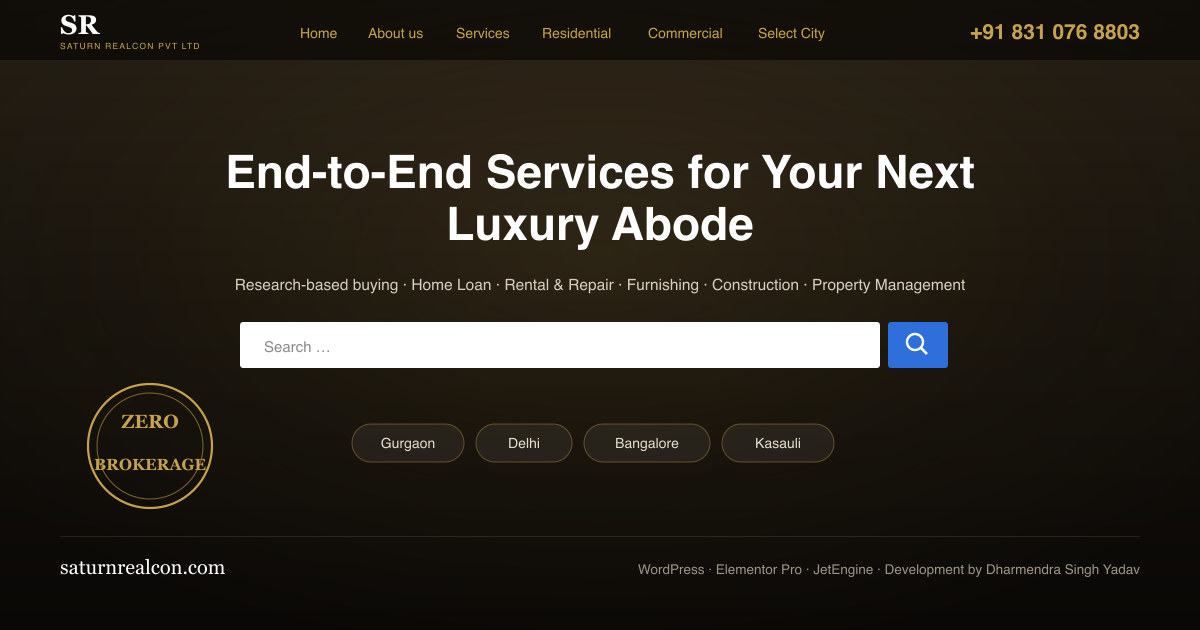
Saturn Realcon — Luxury Real Estate Services Website
WordPress build for a luxury real-estate services company across four cities — Elementor Pro templates over a JetEngine content model, JetSearch property search, and a handover the client's own team could operate.
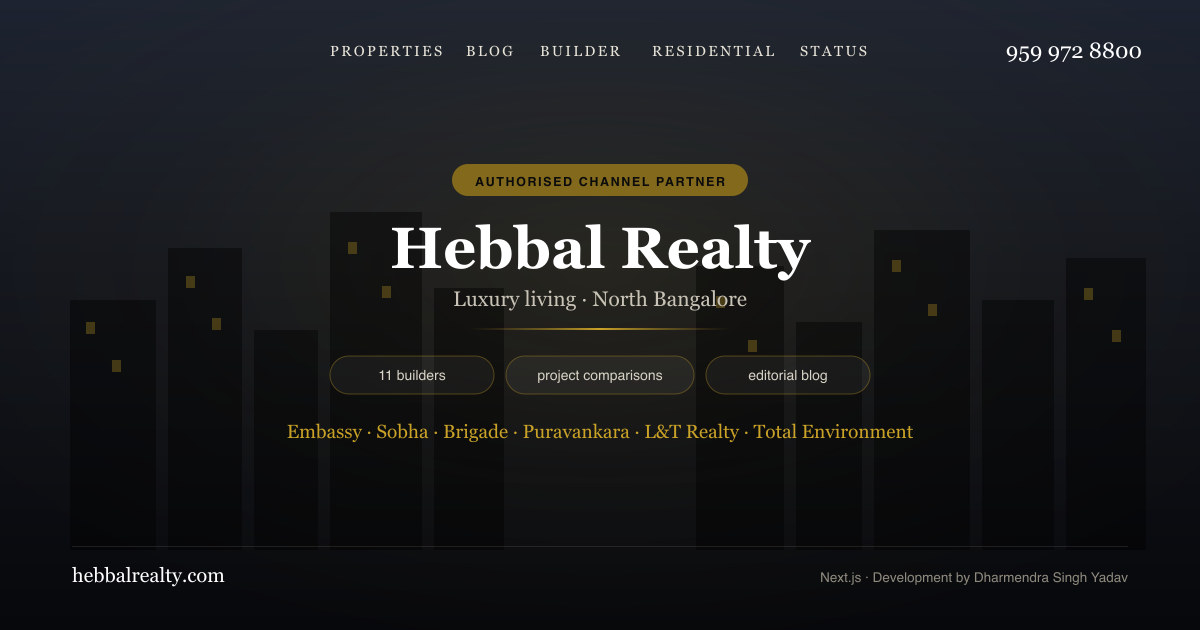
Hebbal Realty — North Bangalore Luxury Property Portal
Next.js property portal for the Hebbal luxury corridor — eleven builder pages, faceted browse, and an editorial layer of head-to-head project comparisons aimed at buyers who already have a shortlist.
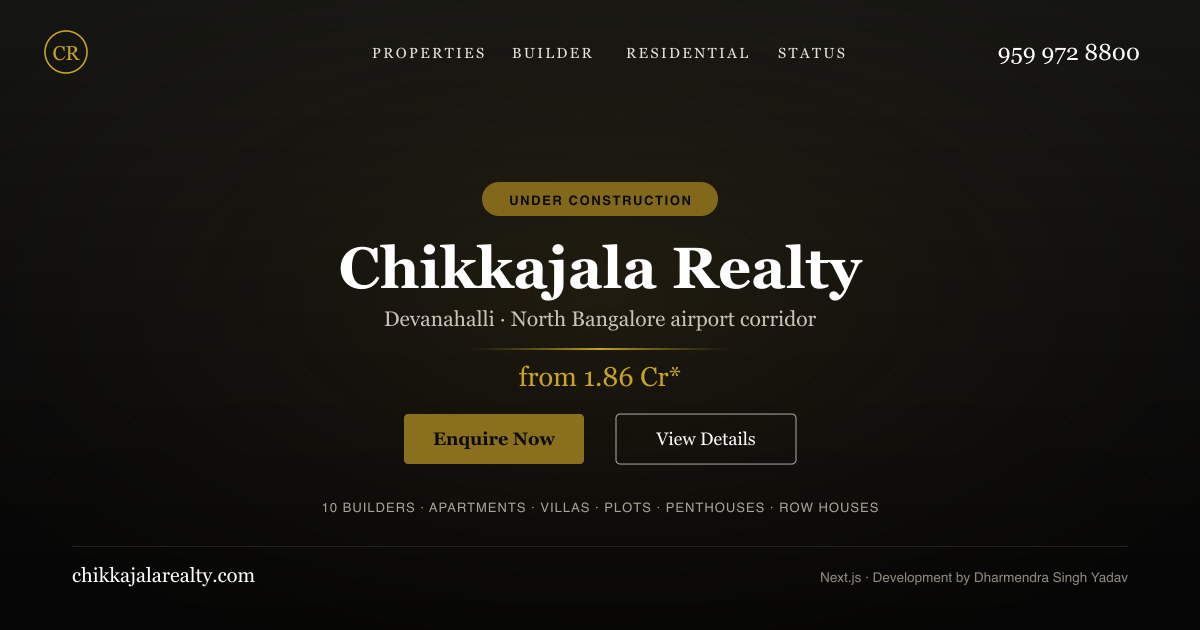
Chikkajala Realty — North Bangalore Property Portal
Next.js property portal for the Chikkajala–Devanahalli airport corridor — faceted browse by builder, type and status, keyword-first project URLs, and Product/Offer schema describing real inventory.